
 Greenhow Inc
House Flies: Why You Have Them and How to Get Rid of Them for Good
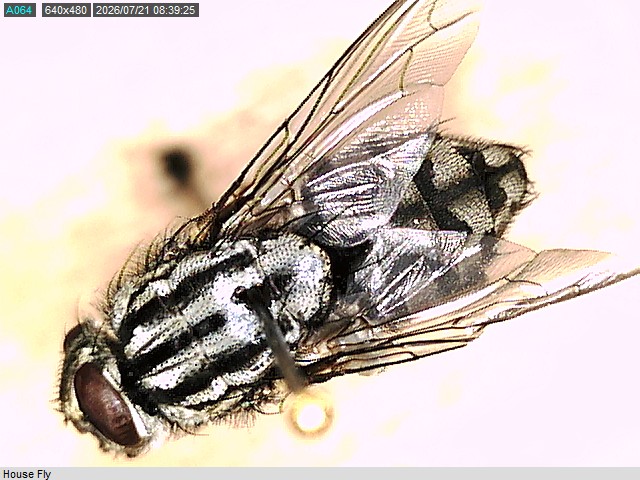
The house fly is one of the most common filth flies found around homes, restaurants, barns, dumpsters, animal areas, compost piles, and other places where wet organic material is present. Adult house flies are medium-sized gray flies, about 1/4 inch long, with four dark stripes on the thorax. They are non-biting flies, but they are still important because they feed and rest on waste, manure, garbage, decomposing food, and other contaminated materials before landing on food-contact surfaces, people, animals, or structures.
University of Florida entomologists describe the house fly as a truly cosmopolitan pest — one that showed up almost everywhere humans and their waste did, and that remains one of the most economically important insects in the world because of how closely it lives alongside people. A 2021 review in the Journal of Integrated Pest Management, co-authored by Penn State researchers, puts the U.S. cost of house flies at up to $1 billion a year once disease transmission, product losses, and control efforts are factored in.
UMass emphasizes that fly control works best when a program is in place before fly numbers build. Because flies may be hidden during part of their life cycle, proper identification, sanitation, and locating breeding material are more effective than relying on adult fly treatments alone.
What Does a House Fly Look Like?
Adult house flies are about 1/5 to 1/3 of an inch long, with the female slightly larger than the male. University of Florida entomology researchers note that house flies have two large, red compound eyes — set noticeably wider apart in females than in males, whose eyes nearly touch. The thorax carries four narrow dark stripes running front to back, the abdomen is a dull yellowish gray with dark markings along the sides, and the short, three-segmented antennae end in a fine bristle. Both sexes have sponging mouthparts rather than biting parts, which is why house flies are a nuisance and a contamination risk but not a biting pest.
Life Cycle and Breeding Sites
House flies go through complete metamorphosis: egg, larva, pupa, and adult. In warm conditions, the life cycle can be very fast, with UMass noting that house flies commonly complete development in about two weeks. University of New Hampshire Extension entomologists break that timeline down further: a female typically lays 75 to 150 eggs per cluster, depositing anywhere from 350 to 900 eggs across her lifetime, starting four to twelve days after she emerges as an adult. Depending on temperature, the eggs hatch into larvae in under a day, and the full cycle from egg to flying adult can take as little as three days or stretch to several weeks in cooler conditions — which is how a single overlooked breeding site can produce six to eight generations in a single year.
Eggs are usually deposited in fresh manure, spilled or decomposing feed, garbage, compost, or other wet organic material.
After hatching, the larvae, commonly called maggots, burrow into the feeding material and feed on the wet organic matter before pupating. Before pupating, mature larvae may move away from the original feeding site, which is why the visible adult flies may not be directly on top of the breeding source. Adult house flies are usually short-lived, but rapid development and repeated egg laying can allow populations to build quickly when sanitation problems remain. UNH Extension also notes that in colder climates, house flies commonly overwinter outdoors as pupae in manure piles and organic debris, while some adults survive winter indoors in heated buildings — a reminder that a fly problem noticed in early spring may trace back to breeding material that sat undisturbed all winter.
Feeding Behavior
House flies have sponging mouthparts and cannot pierce skin or chew solid food. Instead, they feed on animal waste, decomposing feed, garbage, and liquefied organic matter. When feeding on solid material, the fly may regurgitate fluid onto the surface to help dissolve the food and then sponge up the liquid.
UMass research highlights why this matters: non-biting flies that live around people and animals can carry pathogens picked up from feces, wounds, garbage, animal waste, and other contaminated material. The fly’s crop acts as a temporary storage area for food before digestion, and pathogens can survive there. When the fly later regurgitates, bubbles, defecates, or lands on food and surfaces, it can mechanically move contaminants from dirty sources to clean areas.
Inspection Focus
In most residential house fly situations, the flies are coming from outside the structure. There is usually not enough wet organic material inside a home to support a true indoor breeding source. Exceptions can include spoiled food, a rotting box of vegetables, trash, animal waste, a forgotten container, or another hidden source of wet organic matter.
During inspection, look for wet, decaying organic material and fly attractants. Common exterior sources include pet waste, compost piles, garbage areas, dumpsters, spilled grain or feed, animal manure, soiled bedding, grass clippings, rotting fruit or vegetables, and organic debris near the structure. Around commercial accounts, also inspect dumpster pads, grease or food trails, drains near trash areas, doorways, loading areas, and any location where moisture and organic material collect.
Do not assume the heaviest adult fly activity is the breeding source. Adults may gather around doors, lights, windows, food odors, or warm resting surfaces while the actual larval source is nearby but less obvious.
For accounts with livestock, kennels, or other animal-waste sources, UNH Extension recommends monitoring with sticky spot cards — 3-by-5-inch white index cards placed near fly resting surfaces and left for seven days. A count of 100 or more fecal or vomit spots on a single card in that week signals a high level of fly activity and the need for active control, giving a measurable benchmark rather than a visual guess.
Control and Prevention
Control should be based on Integrated Pest Management. Sanitation is the first and most important step: remove manure, pet waste, garbage, spoiled food, decomposing feed, and other wet organic material before flies can complete development. Keep trash containers closed, clean dumpsters and surrounding pads, prevent moisture accumulation, and correct drainage problems that keep organic material wet. UNH Extension adds that straw should never be used as bedding material around animal areas, since it is a favorite breeding site for house flies, and that composting manure at proper temperatures — rather than simply piling it — helps deny larvae a place to develop.
Exclusion supports sanitation. Keep doors and windows closed whenever possible, repair torn screens, close gaps around doors, and use tight-fitting screens. Screens with weatherstripping are preferred because the soft material around the screen edge helps close small gaps. On commercial accounts, consider door sweeps, air curtains, better trash handling, and the placement of insect light traps inside, away from exterior views and food-preparation surfaces.
Insecticides and fly baits can help reduce adult activity, but they should not be treated as the main solution. If breeding material remains, new flies will continue to emerge. Use baits and exterior resting-area treatments as supplemental tools, especially around dumpsters, waste areas, and commercial entry points, while continuing to correct sanitation and exclusion issues. Rotating between insecticide classes with different modes of action is worth building into any program: house flies are notorious for developing insecticide resistance, and UNH Extension and the Penn State–linked Journal of Integrated Pest Management review both flag repeated use of the same material as the fastest way to breed resistant populations. On farm and animal-facility accounts, biological control with commercially available parasitic wasps that target fly pupae can also support a sanitation-first program when it’s applied properly.
House fly activity is typically highest during warm weather, often from mid-June through early August in our region, but activity can continue whenever temperature, moisture, and breeding material remain favorable.
Frequently Asked Questions
Do house flies bite? No. House flies have sponging mouthparts, not biting mouthparts, so they cannot bite people or animals. The health risk comes from contamination, not bites — they pick up pathogens on waste and decaying material and can transfer them to food and surfaces.
Why do I have house flies if my house is clean? Because in most residential cases the breeding source is outside the structure, not inside it. House flies need wet organic material to lay eggs in — pet waste, a compost pile, a dumpster, or spilled feed nearby can support a breeding population even in a spotless kitchen.
How fast do house flies multiply? Very fast. A single female can lay several hundred eggs in her lifetime, and under warm conditions the full life cycle from egg to adult can take as little as one to two weeks, allowing six to eight generations per year.
What diseases can house flies spread? House flies can mechanically transmit disease-causing organisms such as salmonella and E. coli by moving between contaminated material and food-contact surfaces, picking up pathogens on their body and in their crop along the way.
How do I get rid of house flies for good? Find and remove the wet organic breeding material first — that’s the step most people skip. Pair sanitation with exclusion (sealed doors, intact screens) and use baits or insecticides only as a supplemental tool, not the primary fix.
Remember this:
- House flies are a sanitation and exclusion problem, not a spraying problem.
- Find and remove wet organic breeding material first.
- Adult flies seen at windows, doors, lights, or counters developed somewhere else nearby.
- Residential accounts usually require source correction, vacuuming, screening, and door management.
- Commercial accounts often require dumpster sanitation, door control, traps, baits, and targeted exterior treatments.
- On livestock or kennel accounts, sticky spot cards give a measurable weekly fly-activity count instead of a visual guess.
- House flies do not bite, but they can move contaminants from waste and decaying material to clean surfaces.
House fly resting on a surface, showing the four dark thoracic stripes and red compound eyes typical of Musca domestica
If you’re seeing house flies build up around your home or business, contact GreenHow for an inspection. We’ll help you find the actual breeding source — not just knock down the adults you can see — and put a sanitation-first Integrated Pest Management program in place before the next generation hatches.
Dealing with a different small-fly problem? See our companion post on fruit flies in commercial food service, or explore our full pest control services.
Other sources for additional information:
- Fly Control Measures: Crops, Dairy, Livestock and Equine — UMass Amherst CAFE
- Why You Should Pay Attention to Fly Vomit — UMass Amherst
- House Fly Fact Sheet — University of New Hampshire Extension
- House Fly, Musca domestica Linnaeus — University of Florida IFAS Featured Creatures (EENY-48)
- Geden, C.E., et al. “House Fly (Diptera: Muscidae): Biology, Pest Status, Current Management Prospects, and Research Needs.” Journal of Integrated Pest Management, Oxford Academic, 2021.