
How to Get Rid of Fruit Flies in Restaurants and Commercial Kitchens
How to Get Rid of Fruit Flies in Restaurants and Commercial Kitchens
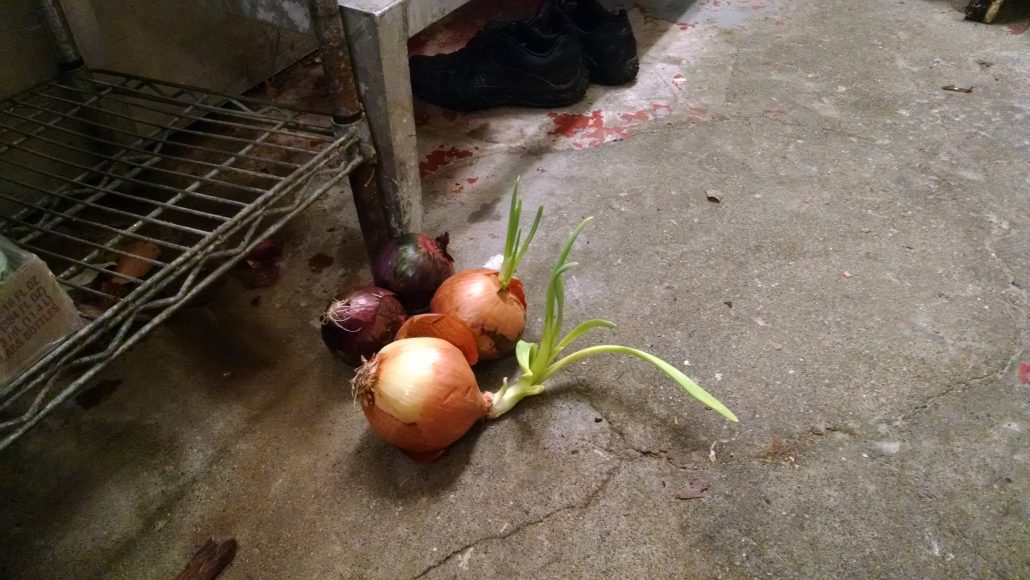
Onions sprouting inside a restaurant kitchen?
Yes, when they hit the ground and roll under kitchen equipment. The heat and moisture in the kitchen cause first, the sprouts, which really don’t matter. Second and most important, the wet organic matter around the onions leads to fruit flies in restaurants. Adult fruit flies are a pest and like all flies can transfer disease by landing on wet organic matter then landing on food or food preparation surfaces and equipment.
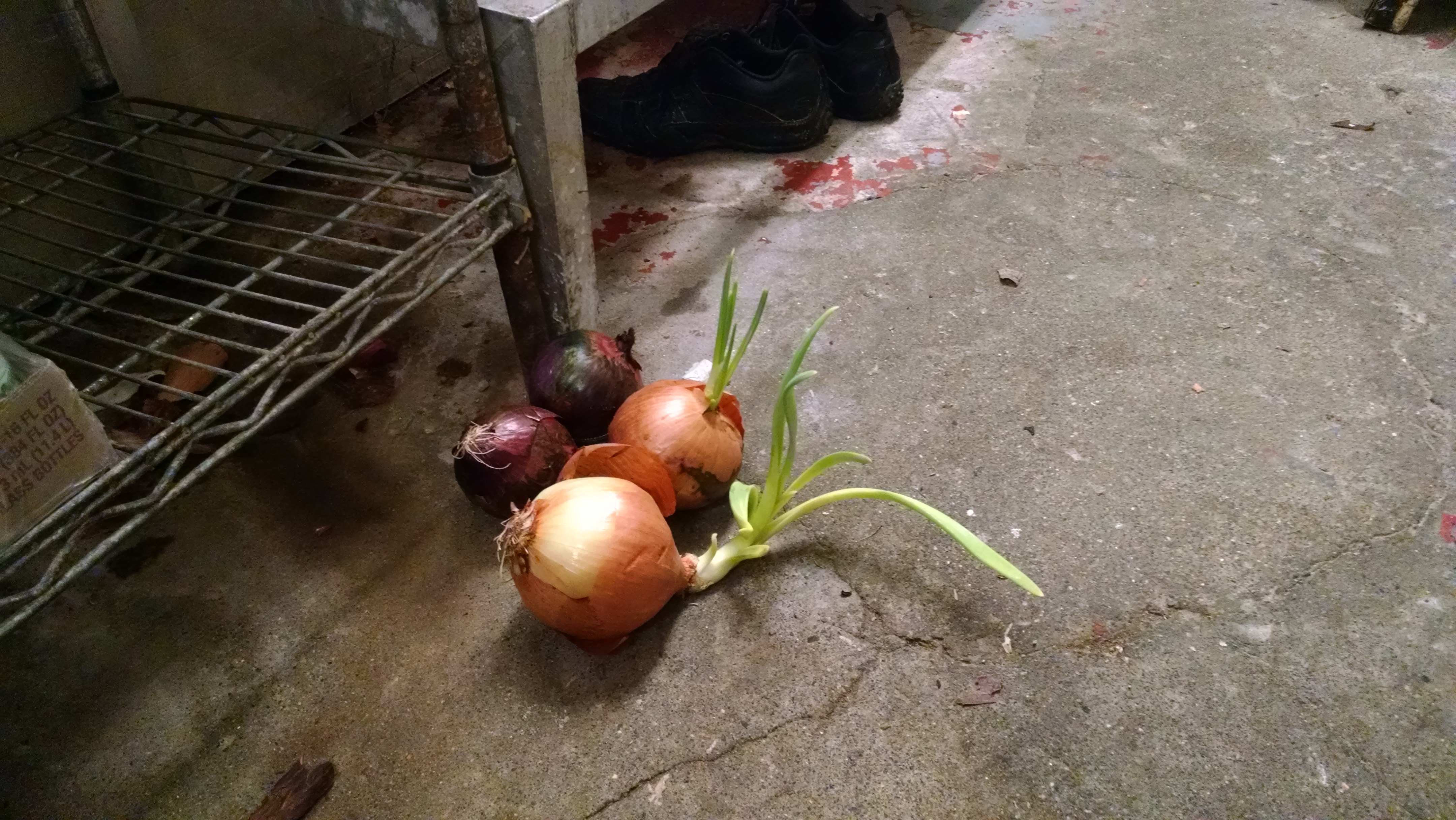
Onions that rolled under equipment sprouting.
Fruit flies are one of the most common — and most persistent — pest problems in commercial kitchens and food service operations. A single female can lay up to 500 eggs in her lifetime, and the entire life cycle from egg to adult can be completed in as little as a week under warm kitchen conditions. By the time you’re swatting adults, hundreds more are developing out of sight.
The good news: fruit flies have an exploitable weakness. Every infestation traces back to wet organic matter. Eliminate that, and you eliminate the flies.
Why Killing Adults Doesn’t Work
When you see flies, the instinct is to reach for a fly strip or spray. Those tactics will reduce adult counts temporarily, but they don’t solve the problem. Think of it as bailing out a boat with a hole in it.
Adult fruit flies (Drosophila melanogaster and related species) are about 1/8 inch long, tan in front, dark in the rear, and almost always have red eyes. They are not the problem — they’re the symptom. The problem is wherever they are laying eggs.
Fruit flies undergo complete metamorphosis: egg → larva → pupa → adult. Eggs are laid near the surface of fermenting or moist organic material. Larvae feed and develop there, then crawl upward slightly to pupate. The entire cycle can take as few as 8 to 10 days at commercial kitchen temperatures. Until you destroy the breeding source, adults will keep emerging.
Where to Look: Following Water and Organic Matter
Fruit flies breed in wet organic matter — specifically the thin, slimy biofilm of sugars, grease, and food debris that accumulates in places your cleaning crew may not reach daily. Follow two things: where water flows and where food particles collect.
High-priority inspection areas in commercial kitchens:
- Floor drains — especially those under equipment or in mop closets that go weeks without attention. The biofilm that coats the inside of drain pipes is a perfect breeding ground.
- Under ice machines and refrigerators — heat and condensation create ideal conditions. Food particles — even a single onion that rolled under a rack — can sprout, ferment, and fuel an infestation.
- Dishwasher areas — water pools, food debris accumulates in crevices around the door seal and tray conveyor.
- Bar floor drains and drip trays — soda lines, beer lines, and liquor well areas all accumulate sugar residue. Even a thin film is enough.
- Soda dispensers — a nearly invisible sugar residue under the nozzle area is ideal fly food.
- Mop sinks and mop closets — standing water and organic mop residue are classic overlooked sources.
- Walk-in cooler door frames — condensation at the threshold can accumulate debris over time.
To inspect properly, get on your hands and knees with a flashlight, screwdriver, tubing brush, hand mirror, putty scraper, and nitrile gloves. Draw a map of every drain in your facility — including ones under equipment you may have forgotten — and share it with your team.
Cleaning: Surface and Deep
As you pull out debris and wipe up organic matter during your inspection, you are doing surface cleaning. That’s necessary but not sufficient. Drains require deep cleaning.
The right way to clean a drain
- Remove the drain cover and brush debris from the underside.
- Soak the cover in a biological cleaner.
- Using a tubing brush sized slightly smaller than the drain pipe, scrub the interior wall of the drain and pipe. Wear safety glasses — material will splash.
- Rinse thoroughly.
- Apply a biological cleaner and let it dwell.
Use a biological cleaner, not bleach. Biological drain cleaners contain microbial cultures and enzymes that actually digest the organic biofilm that flies breed in. Bleach kills the microbes and can damage pipes; it does not digest the organic film. GreenHow uses and sells the InVade Bio Foam by Rockwell Labs — a concentrated foam formula that coats all sides of a drain and pipe, maximizing contact time with the biofilm. It is a Green Zone product with no harsh chemicals or fumes, and it will not harm septic systems.
Never skip the brush. Biological cleaner applied to an unbrushed drain is like using mouthwash without brushing your teeth. The mechanical action of brushing breaks up the biofilm so the cleaner can penetrate.
After Cleaning: What to Expect
Even after a thorough source elimination effort, you will continue to see adult flies for several days. That’s normal. Pupa casings you missed will continue to hatch. Stay the course, repeat your inspection and cleaning, and the population will collapse.
Fruit fly adult traps (vinegar traps, commercial pheromone traps) are appropriate as a monitoring tool at this stage — to confirm whether you’ve found all the sources — but not as a primary control method.
Prevent Recurrence: Maintenance Protocol
Fruit flies come back when cleaning slips. A sustainable prevention program includes:
- Weekly drain brushing and biological cleaner application for all floor drains, especially in high-risk areas.
- Monthly deep cleaning under heavy equipment that is rarely moved.
- A drain map posted in the kitchen so every drain gets attention, not just the visible ones.
- Same-day disposal of overripe produce; never store onions, potatoes, or other root vegetables where they can roll under equipment.
- Immediate cleanup of spills under equipment, soda stations, and bar areas.
When to Call a Pest Control Professional
If you’ve done a thorough inspection and cleaning and fruit flies persist after 10 to 14 days, a professional inspection is warranted. There may be a breeding source you haven’t located — a cracked drain line, a void behind equipment, or a drain in an unexpected location. GreenHow serves restaurants, commercial kitchens, and food service operations throughout Greater Boston, the South Shore, and Cape Cod.
Contact GreenHow for commercial pest control
See also: How to Get Rid of Fruit Flies in Your Home Kitchen — our companion guide for residential infestations.