
What are these tiny bugs on my stuffed animals?
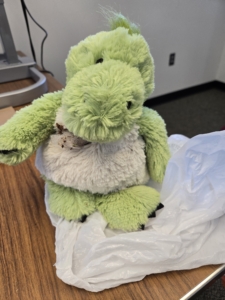
Stuffed animal being eaten by drugstore beetles
A customer called with small bugs all around the bedroom, especially around the windows. After an investigation, the service technician took samples and identified the insect as a drugstore beetle. The presence of the insect near the windows was not important information for the technician to discover the source. The insect was attracted to the light of the window.
Identifying Tiny Bugs in the Bedroom
The Greenhow Pest Control technician investigated the upstairs looking for anything containing organic matter. Obvious sources like vacuum bags, potpourri, and pet bedding were eliminated. Then, she noticed dark insects on the belly of this stuffed animal. It turned out to be stuffed with husks from buckwheat that had not been cleaned prior to usage. The drugstore beetles were feeding on the husks.
What Attracts Drugstore Beetles to the Home?
Stuffed animals aren’t the only culprit attracting beetles to your home. Drugstore beetles will eat dried plant products. There is another species of insects, dermestid beetles, also known as carpet beetles that are attracted to natural fibers, hair, fur, dead insects, feathers, seeds, grains, and organic fillings like buckwheat.
Common household areas that provide a food source for beetle larvae include but are not limited to:
- Buckwheat pillows
- Vacuums
- Comforters with organic fills
- Wool clothing
- Leather jackets
- Pet food
- Grains
- Cereals
- Couches
Why Beetles Can Go Unnoticed
Beetles can live undetected in a home for months before anyone realizes they are there. Adult beetles are small and often mistaken for other insects, while larvae stay hidden in dark, undisturbed areas. Closets, under beds, inside stuffed toys, and within furniture cushions provide ideal conditions for larvae to feed and grow without being seen.
Because damage happens gradually, homeowners often notice the insects themselves before they notice damaged items. By the time adult beetles appear near windows or light fixtures, the infestation is usually already established somewhere inside the home.
Carpet Beetles vs. Drugstore Beetles
Carpet beetles and drugstore beetles are commonly confused because of their size and behavior. Both are small, dark insects that feed on organic materials and may be seen near windows. However, their food preferences differ slightly. Carpet beetles target natural fibers and animal-based materials, while drugstore beetles more commonly plant products.
Proper identification is critical, as it will aid locating the source of the insects and having the wrong pest can delay resolution and allow the infestation to continue spreading.
How Beetles Spread Indoors
Drugstore beetles often enter homes through open windows, doors, gaps around window and doors, or hitchhike inside on dried flowers, birdseed, or groceries. Once inside, they spread by moving from one food source to another. Items made with organic materials, especially those rarely cleaned or disturbed, are particularly vulnerable.
Bedrooms can be a common hotspot because of bedding, clothing, upholstered furniture, and decorative items that may contain natural fibers. Attics and basements where undisturbed natural fibers are stored are important to inspect in the case of a beetle infestation.
How to Prevent Beetles in the Future
Prevention starts with reducing food sources and hiding places. Helpful steps include:
- Regularly vacuuming carpets, furniture, and baseboards
- Inspecting stuffed animals, pillows, and comforters for organic fillings
- Storing clothing in sealed containers
- Washing or dry cleaning natural-fiber items periodically
- Keeping pantry items sealed and properly stored
Routine inspections can help catch issues before they become infestations.
When to Call a Pest Control Professional
If you continue to see beetles after removing suspected items or if the source of the infestation is unclear, professional help is recommended. A trained pest control technician can properly identify the insect, locate hidden food sources, and apply targeted treatments to eliminate the problem.
No home is fully immune to the risk of pests, whether you live on the North Shore, Cape Cod, or anywhere in between. Even something as harmless-looking as a stuffed animal can become a hidden food source for pests. Professional inspection ensures the issue is fully resolved and helps prevent future infestations.
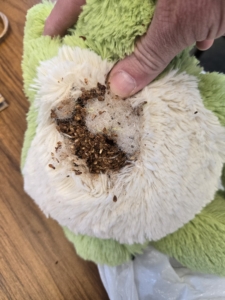
Detail of stuffing in stuffed animal being eaten by drugstore beetles
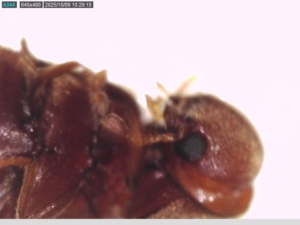
Drugstore beetle close up side of head
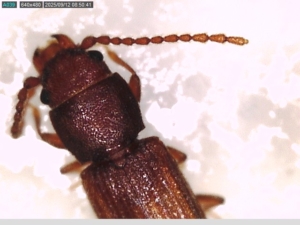
Drugstore beetle top view